I was packing my kids' back-to-school supplies on September 1st when I saw the headline: France's anti-ultra-fast-fashion law had just taken effect. A real levy, finally. After years of hearing this bill get delayed and diluted, I actually felt something close to professional relief — someone, somewhere, was putting a price tag on disposable clothing.
Then I read the details. That relief didn't last long.
What the law actually does
Since September 1, 2026, a scaling levy applies to certain textile products: €0.50 on underwear, €2 on a t-shirt, up to €12 on a jacket. The fee is set to climb every year, reaching roughly €19.50 per item by 2030, capped at 50% of the product's pre-tax price. The law, passed by Parliament in June, targets companies meeting two combined criteria: an extremely high volume of items placed on the market, and a repair-cost-to-price ratio that makes repair economically absurd by design. In other words: clothes engineered to be thrown away, not fixed.
On paper, that's reasonable. In practice, this technical filter lands almost exclusively on Shein, Temu, and AliExpress — platforms that push out tens of thousands of new listings a week at prices that don't even cover the cost of the cotton. Since a separate €3 fee on small parcels took effect in July, the French government is already reporting a 30-40% drop in import volumes from China. The numbers are real.
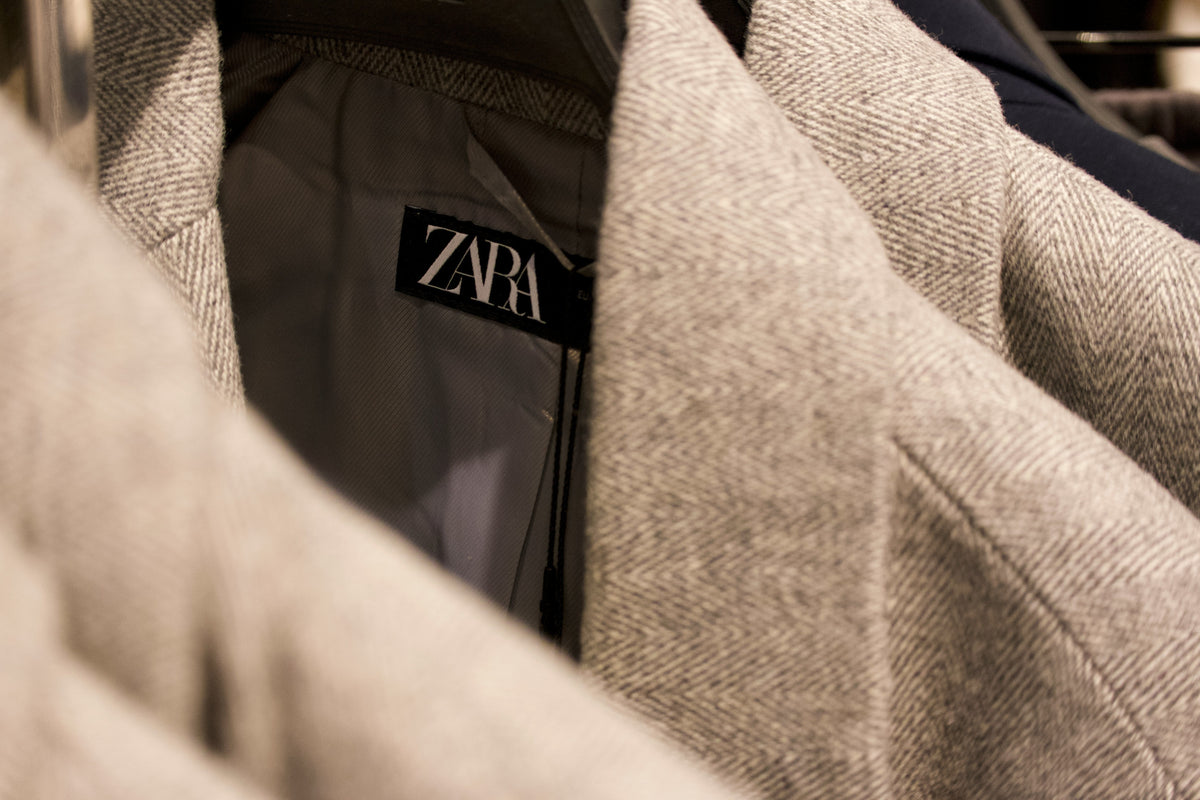
What I find more revealing is what the law doesn't say: according to the same coverage, Zara and H&M aren't affected by this levy at all.
The blind spot nobody wants to look at
I spent years running operations for a company in the consumer electronics industry. One thing you learn fast when you manage a production chain is that volume and speed — not country of origin — are the real cost levers. A €4.99 t-shirt shipped from Bangladesh through a European warehouse isn't fundamentally more "sustainable" than a €4.99 t-shirt shipped directly from Guangzhou. It's the same industrial logic, just better dressed.
Zara releases roughly 500 new items a week. H&M has been rolling out micro-collections every two to three weeks for years — not an accusation, that's their own stated business model, and it predates Shein by two decades. The "volume plus repairability" criteria the French law uses happens to exempt both chains, because they're legally European, produce some of their range closer to home, and have well-written CSR reports. Not because their model of constant wardrobe turnover pollutes any less.
I'm not saying taxing Shein and Temu is a bad idea — it's a necessary first step, and it's overdue. What worries me is what happens if the measure stops there: it risks telling consumers the problem is solved, that avoiding two or three Chinese apps is enough to keep buying ten new items a month everywhere else with a clear conscience.
What actually matters here
What running a company taught me is that a well-made product has a real, non-negotiable cost — and it's almost always higher than you'd guess until you've had to calculate it yourself. At Singulaar, a pair of sneakers costs more because the leather comes from an LWG Gold-certified tannery in Italy, because it's assembled in Cologne rather than an anonymous warehouse, and because we don't drop a new collection every three weeks. We'd rather refine one model over time than churn out a catalog designed to manufacture artificial urgency.
Does that make us perfect? No. Leather has a real environmental cost, and I won't pretend otherwise. But the difference between a product built to last and one built to be replaced isn't about which country made it — it's about intent.
France's law just put a price on part of the problem. Whether future revisions have the nerve to look at the chains that invented fast fashion long before Shein turned it into an empire — that's still an open question.

Leave a comment
All comments are moderated before being published.
This site is protected by hCaptcha and the hCaptcha Privacy Policy and Terms of Service apply.